Timber Inspection
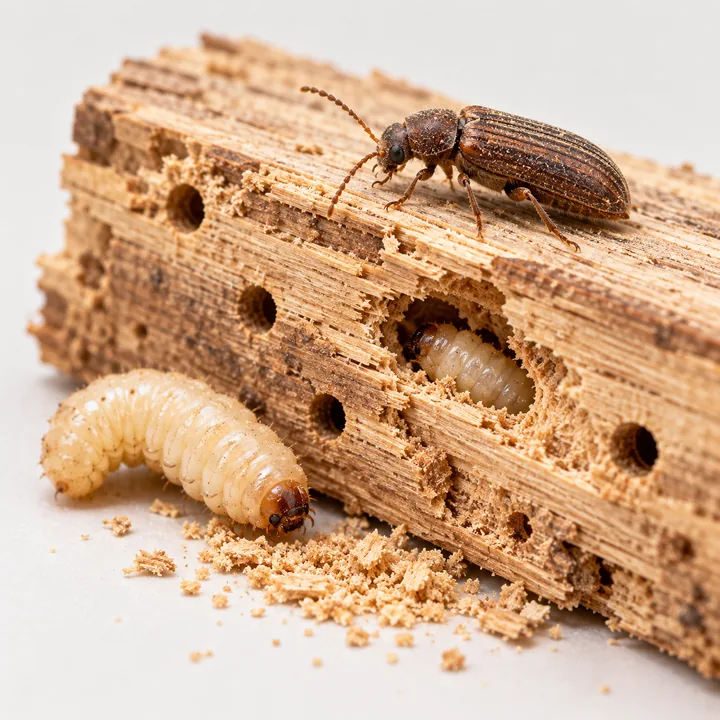
We check visible holes, sawdust, staining and repeated bee movement to identify active and older galleries.
Professional Timber Pest Management
Inspection-led carpenter bee control for exposed timber, roof edges, fascia boards, pergolas, sheds and other wooden structures where repeated nesting is causing damage.
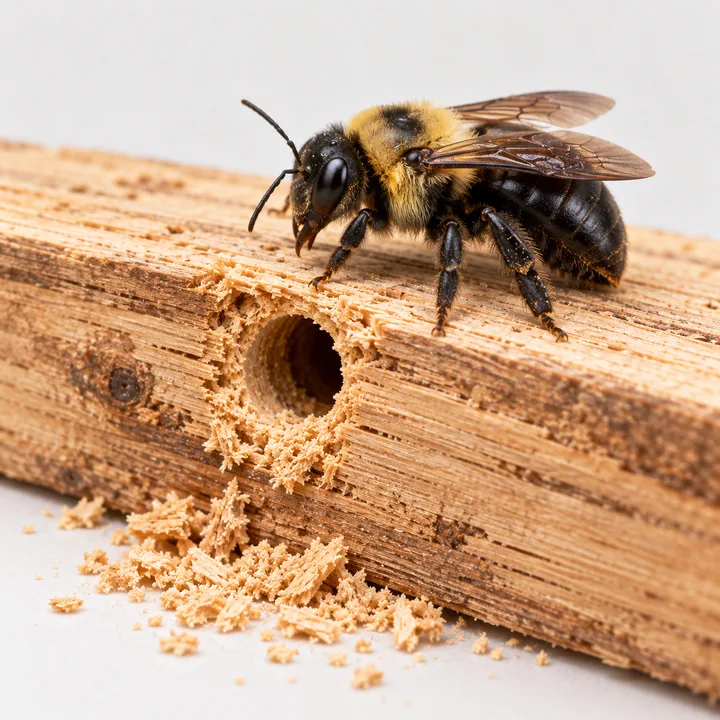
The aim is to identify active nesting, treat the affected timber appropriately and reduce conditions that encourage repeat nesting.
We check visible holes, sawdust, staining and repeated bee movement to identify active and older galleries.
Where appropriate, treatment is focused on active nesting areas rather than indiscriminate spraying.
We identify timber sections with repeated boring or weathering that may need repair after control.
We explain practical timber finishing, repair and exclusion measures that can reduce future nesting pressure.
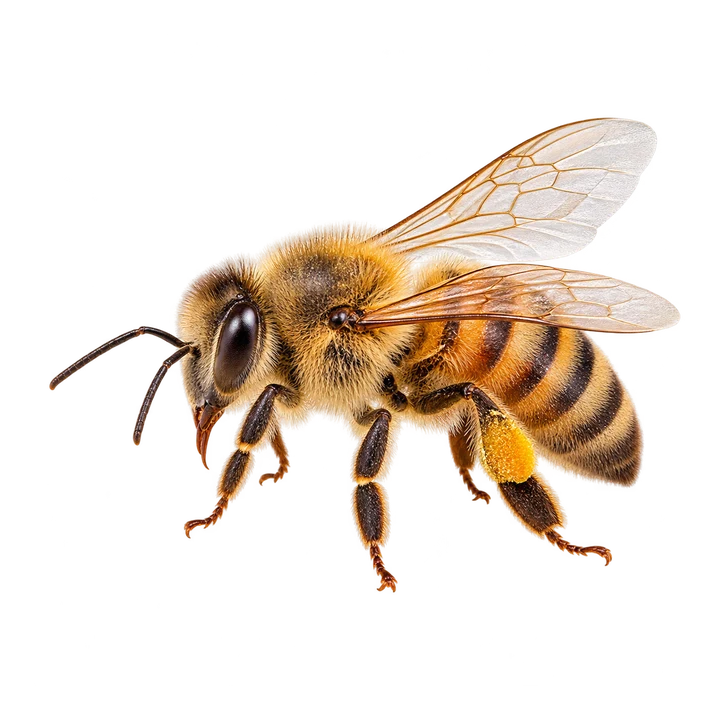
Carpenter bees can excavate neat round openings in exposed or weathered timber and create tunnels inside the wood for nesting. Activity is commonly noticed around fascia boards, roof edges, timber rails, sheds, pergolas and doors.
A single opening may look minor, but repeated nesting in the same wood can extend galleries and increase cosmetic damage. Inspection helps distinguish active nesting from old holes before treatment is planned.
A short four-stage process keeps treatment focused and avoids unnecessary disturbance.
Confirm active holes, timber condition and the areas bees are repeatedly using.
Determine whether the galleries are active and which treatment and repair measures are suitable.
Apply targeted control to active nesting areas using an appropriate method for the property.
Recommend repair, sealing and timber protection after activity has been controlled.
Methods depend on access, activity level, timber condition and the location of the nesting site.
Fresh openings or new sawdust indicate that nesting activity may still be active.
Carpenter bees can return to suitable exposed wood if the underlying conditions remain.
Roof edges and elevated timber are safer to assess with the correct access equipment.
Good control addresses both the active nesting and the timber conditions that allow repeated use.
Ongoing nesting can extend galleries and increase visible damage over time.
We identify active sites, treat where appropriate and recommend repair after control.
Treating every old hole can waste time and product.
Inspection focuses on fresh sawdust, movement and other signs that indicate active use.
Untreated weathered timber can remain attractive.
We pair control with practical repair and timber-protection advice.
Treatment is focused on active nesting rather than the whole building.
Repair and finishing advice helps reduce repeated use of exposed wood.
Difficult roof and fascia areas are assessed more carefully.
You know what was active, what was treated and what should be repaired.
Practical answers to common questions before arranging service.
Carpenter bee openings are often round and smooth, with fresh sawdust or repeated bee activity nearby when the gallery is active.
They do not consume timber as food; they excavate tunnels in suitable wood for nesting.
Active galleries should be assessed first. Sealing an active opening too early can complicate control.
Properly finished and maintained timber can be less attractive than weathered exposed wood, although prevention should follow inspection and control.
Yes, subject to safe access and the condition of the timber. The technician will assess the affected areas first.
Get a free quote today and take the first step towards a safer, healthier, pest-free tomorrow.